Then to Now: How I’ve Watched Charleston Transform
Transformation doesn’t happen overnight.
I've had a front-row seat to a lot of the changes happening across Charleston over the last decade, and when I look at some of these places Then → Now, it's pretty remarkable to see how much the city has evolved.
I've watched projects change the skyline, bring historic buildings back to life, create new public spaces, strengthen cultural institutions, and add much-needed housing and services.
Every project has its own story, but together, they tell a bigger story about how Charleston is growing and changing while still trying to hold onto what makes it special.
Here are a few of the transformations that have stood out to me.
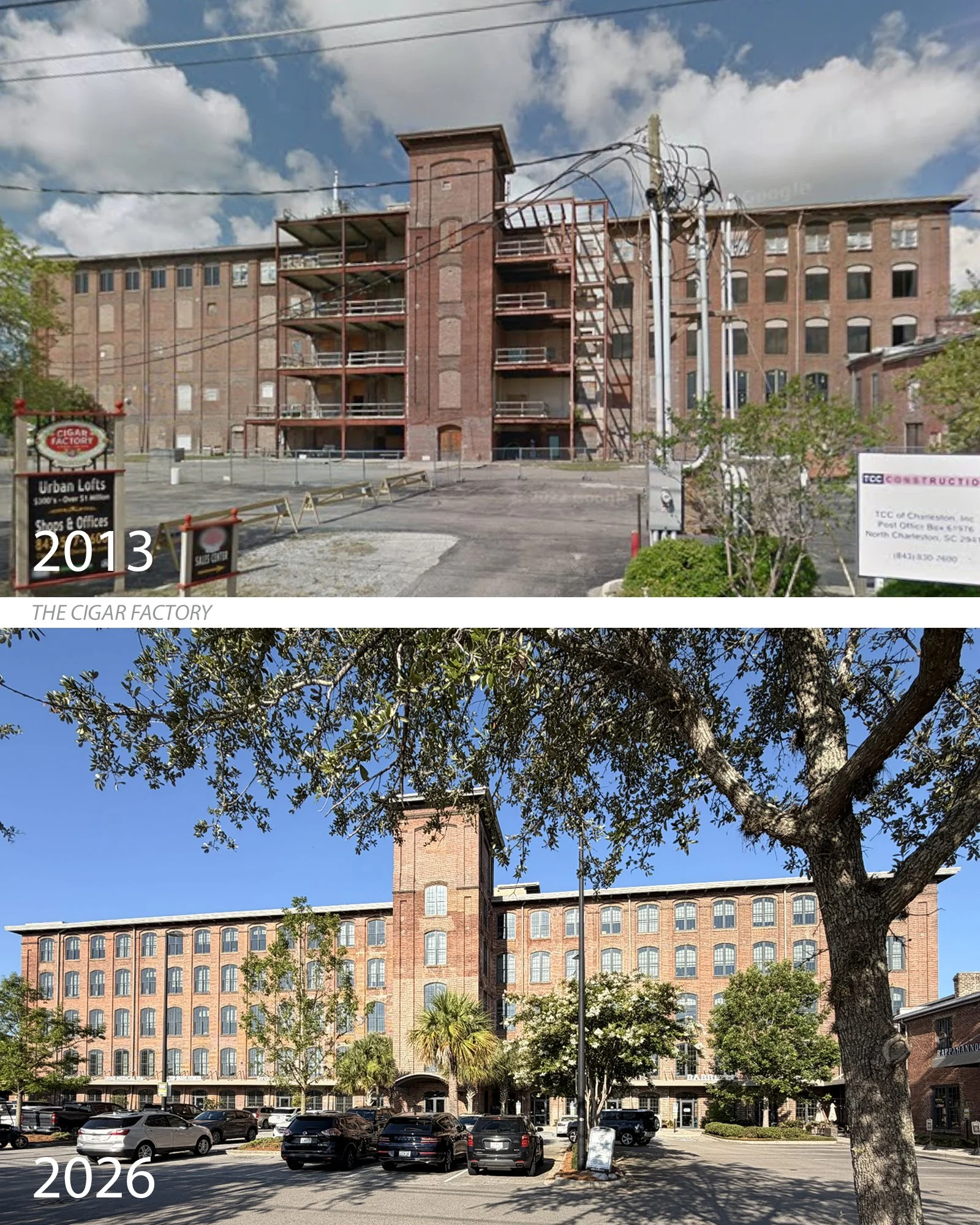
The Cigar Factory
The Cigar Factory is one of my favorite examples of historic preservation and adaptive reuse.
Instead of treating an old building as something that had to be replaced, the project found a way to give an iconic Charleston landmark a new purpose.
I love seeing historic buildings continue to be useful. That's how we keep them alive.
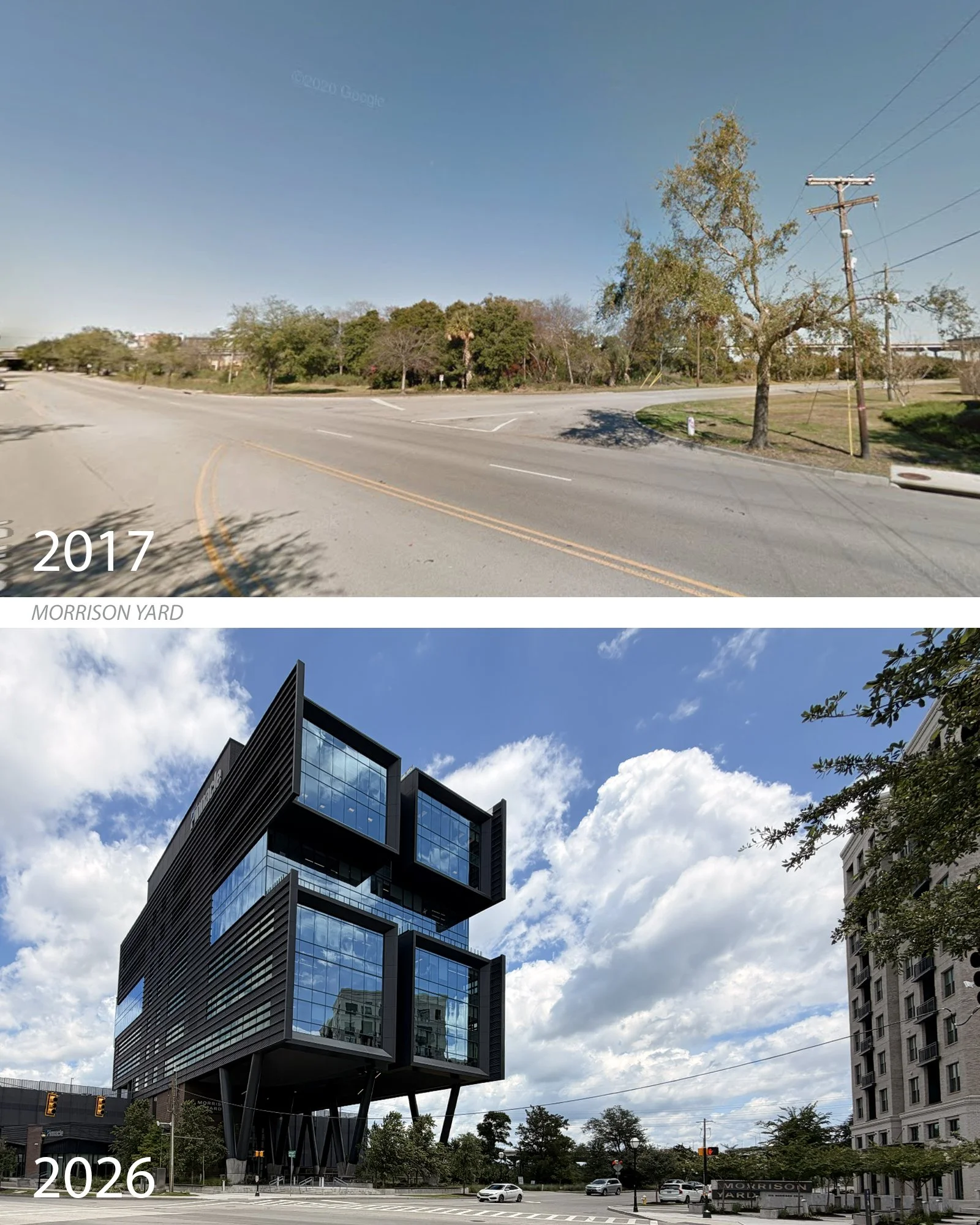
Morrison Yard
Morrison Yard has made a noticeable impact on the eastern gateway into downtown.
I've watched this part of Charleston evolve, and Morrison Yard has become another piece of the city's changing skyline and urban landscape.
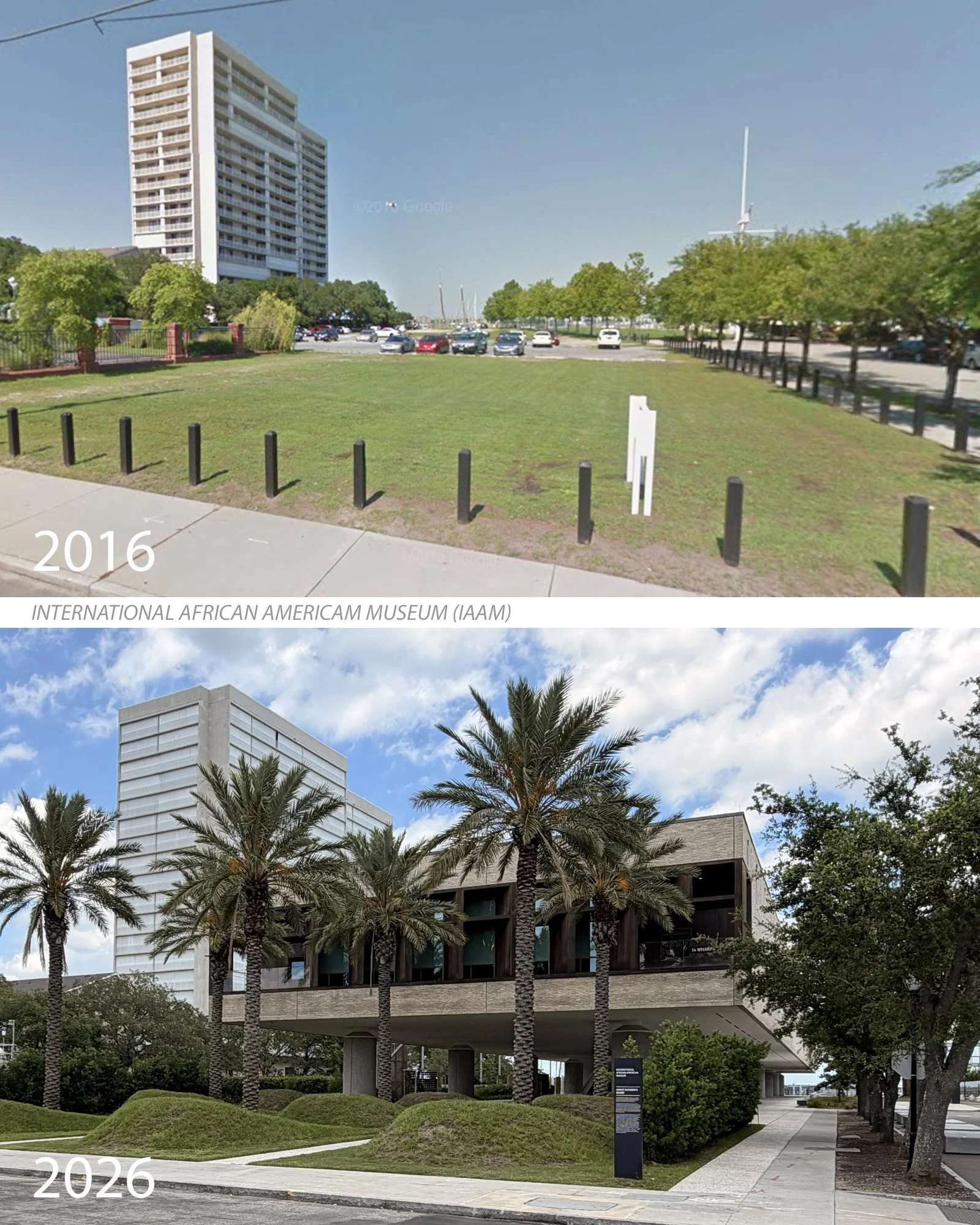
International African American Museum
The International African American Museum is a project with a significance that goes well beyond architecture.
More than 20 years in the making, it created a place to tell and preserve an essential part of American history.
For me, that's one of the most powerful things architecture can do: create a place where people can connect with history and with each other.
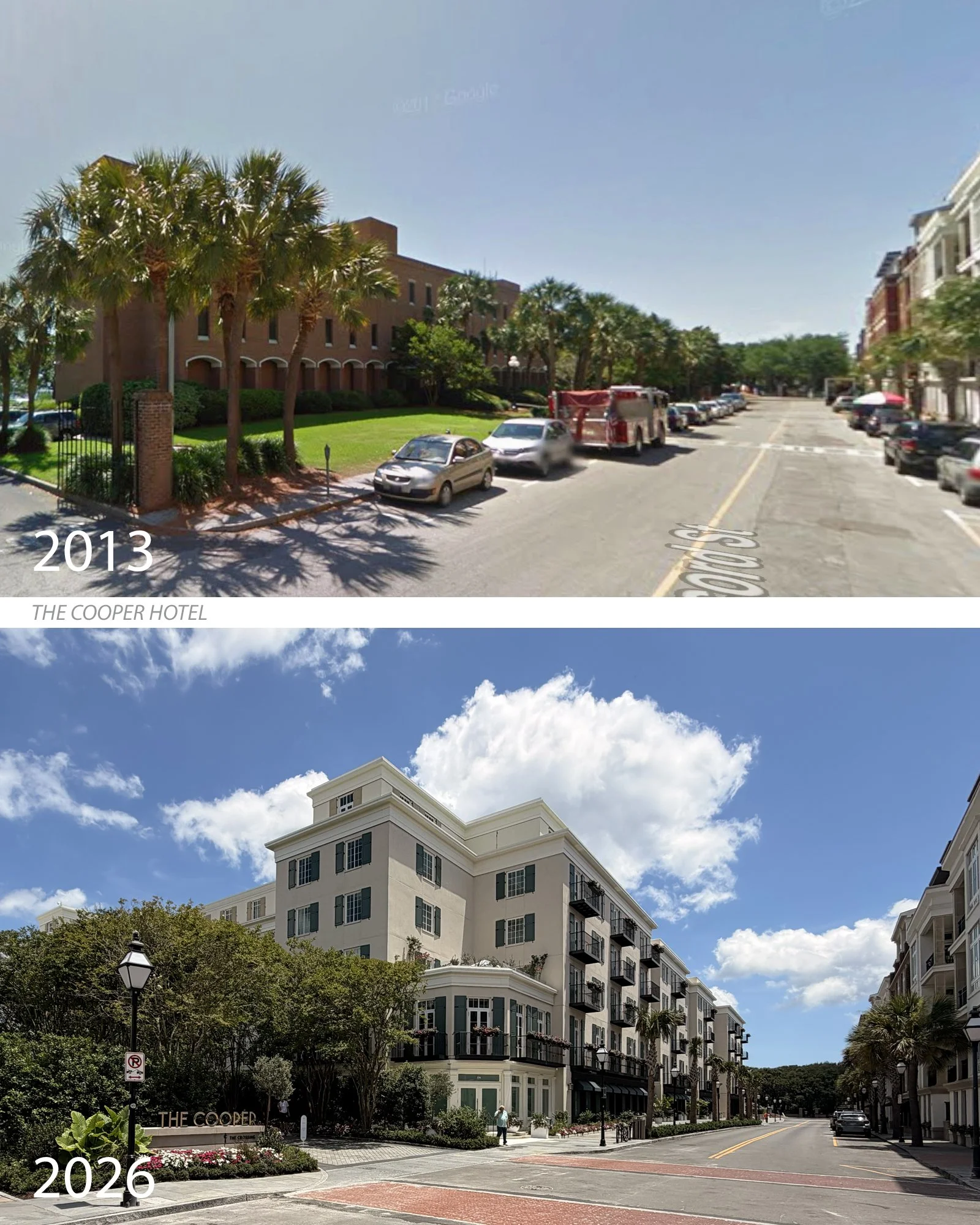
The Cooper
The Cooper brought a true five-star hospitality experience to the Charleston waterfront.
It's also an interesting example of how Charleston continues to develop its relationship with the water and its position as a major hospitality destination.
One80 Place
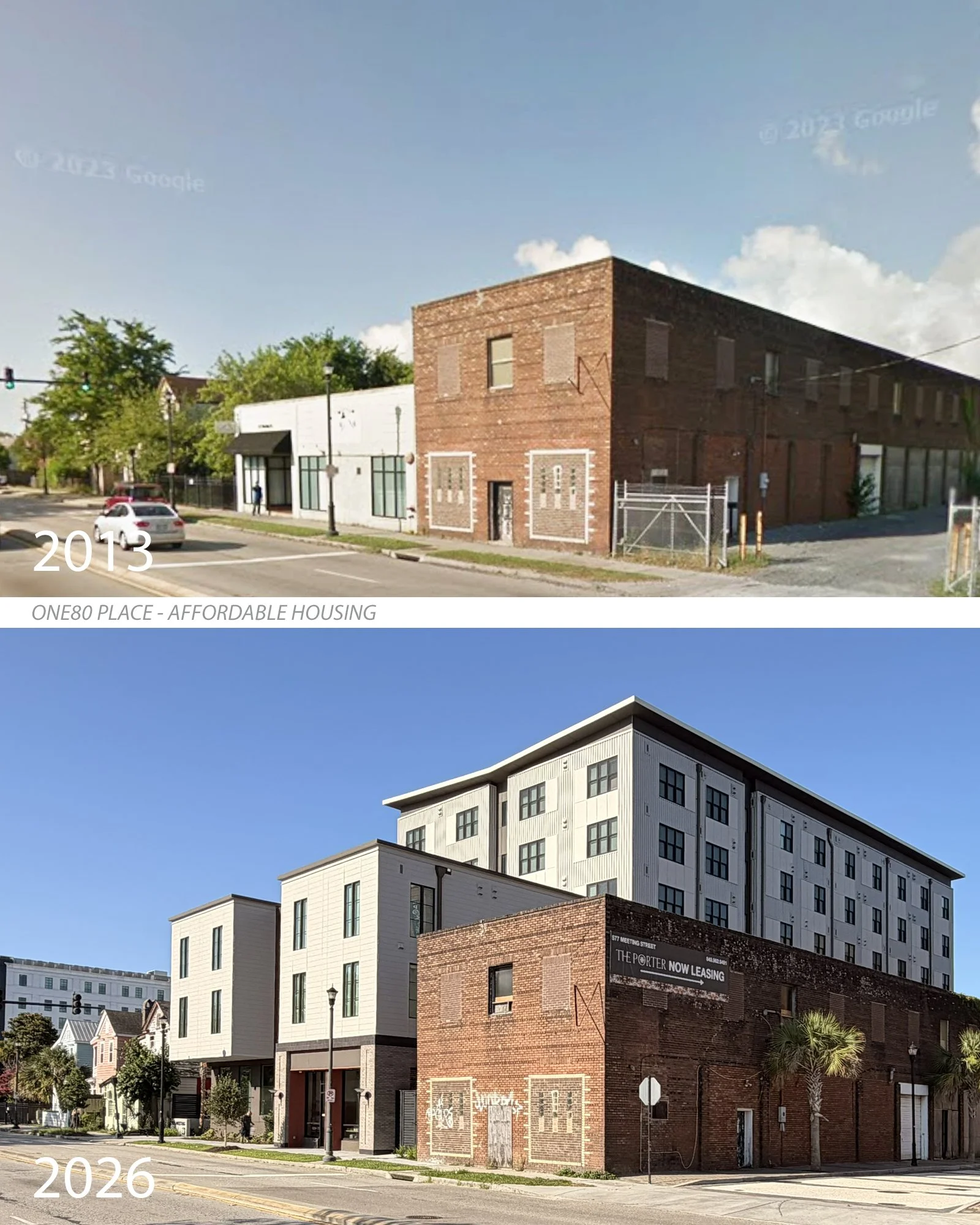
One of the things I appreciate about One80 Place is that it reminds us that transformation isn't always about luxury development or changing the skyline.
Its campus expansion provides permanent affordable housing while expanding shelter and support services.
That's an important part of the conversation about how Charleston grows: making sure the city continues to provide places for people to live and thrive.
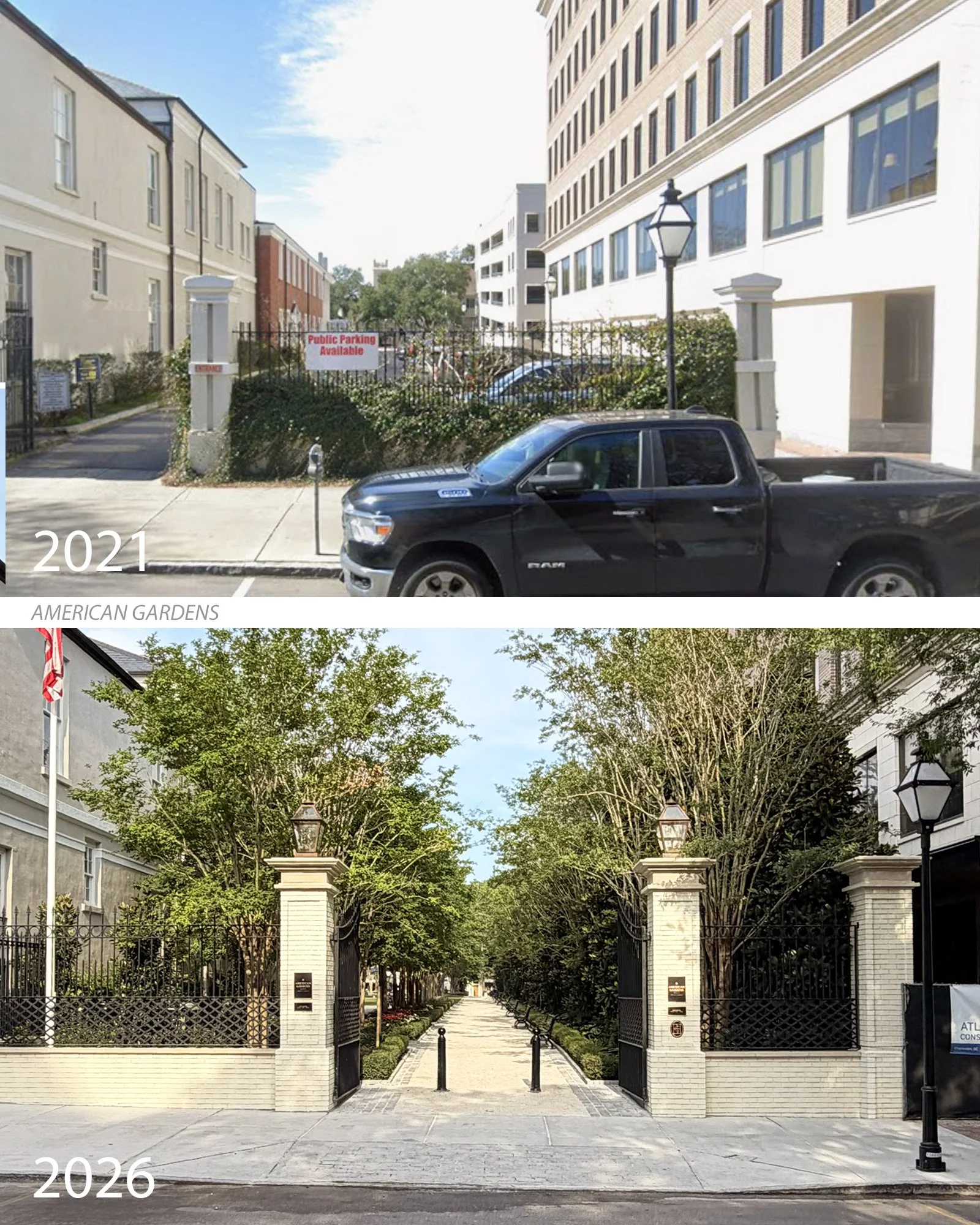
American Gardens
American Gardens is another transformation that I find particularly interesting.
A surface parking lot was turned into a vibrant public green space right in the heart of the city.
Sometimes the biggest impact doesn't come from adding another building. Sometimes it's about giving people a better place to gather, relax, and experience the city.
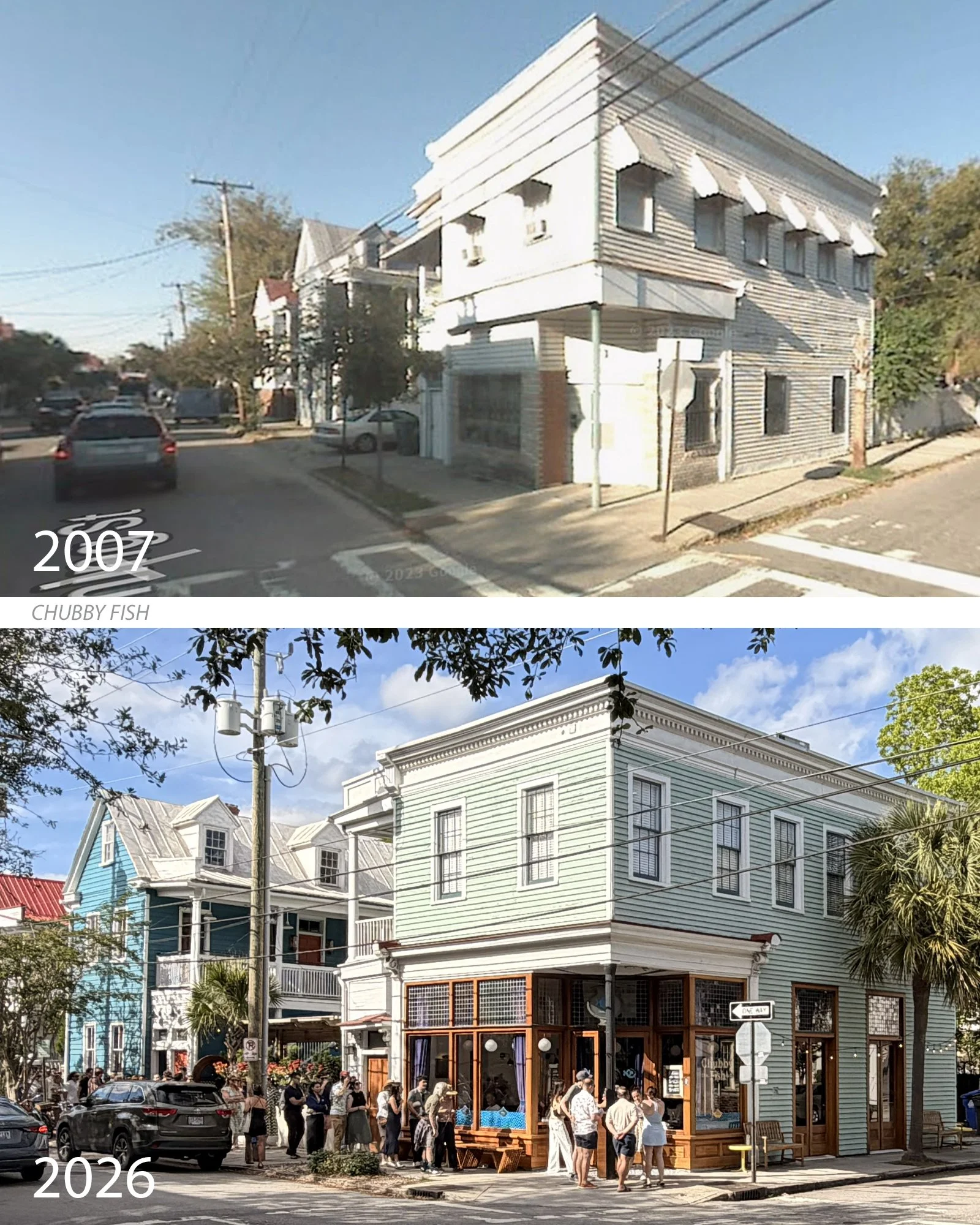
Chubby Fish
Chubby Fish proves that you don't have to build something huge to make a huge impact.
It's a relatively small project, but its influence on Charleston's culinary scene has been anything but small.
I think that's a great reminder that the character of a city isn't created only by its biggest buildings.
Hotel Bennett
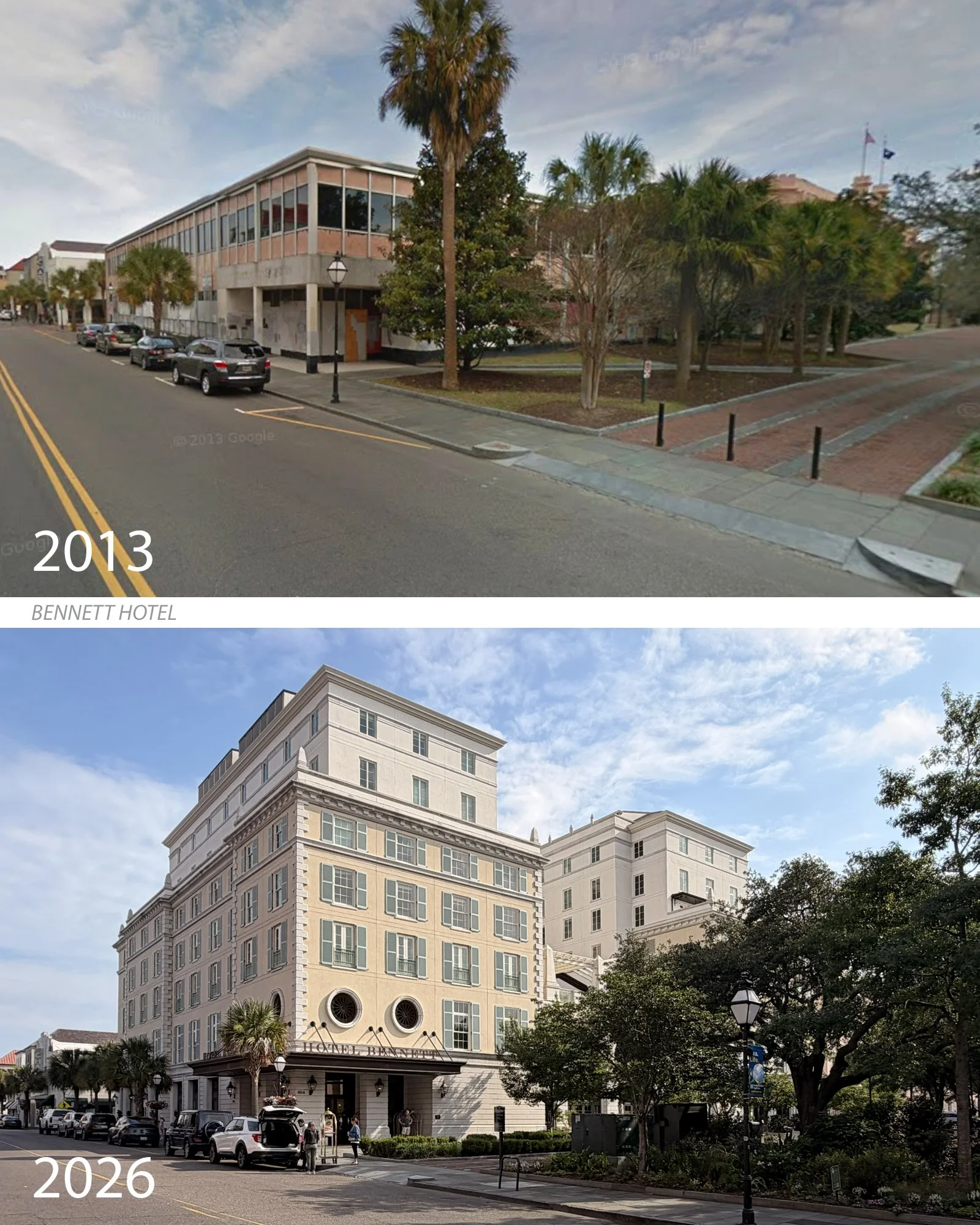
Hotel Bennett transformed the former library site overlooking Marion Square into one of Charleston's premier luxury destinations.
Its location makes it especially interesting to me because of its relationship to one of Charleston's most important public spaces.
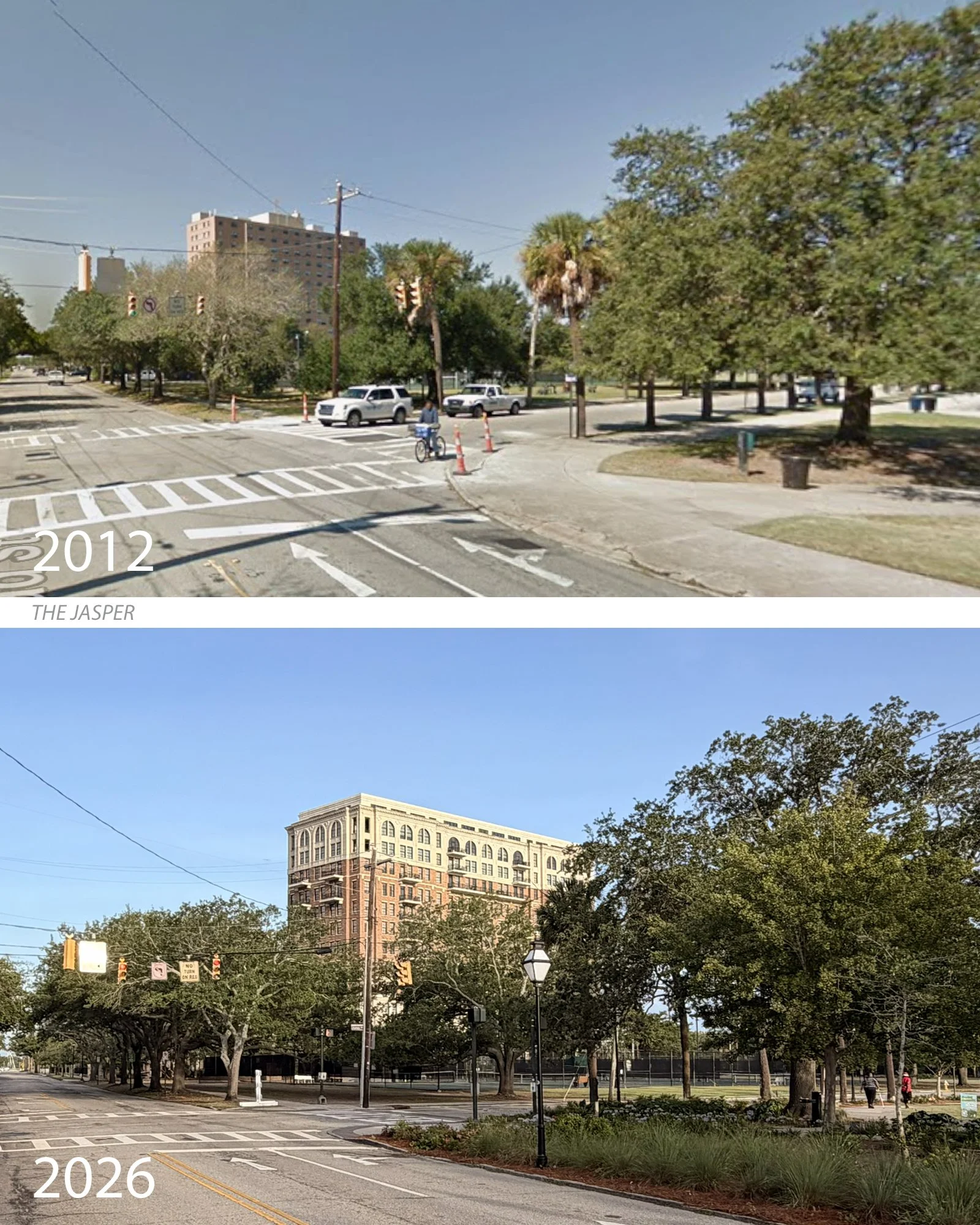
The Jasper
The Jasper brought a new level of luxury residential living to the Charleston skyline.
It's another example of how the residential landscape of the peninsula has changed significantly over the last decade.
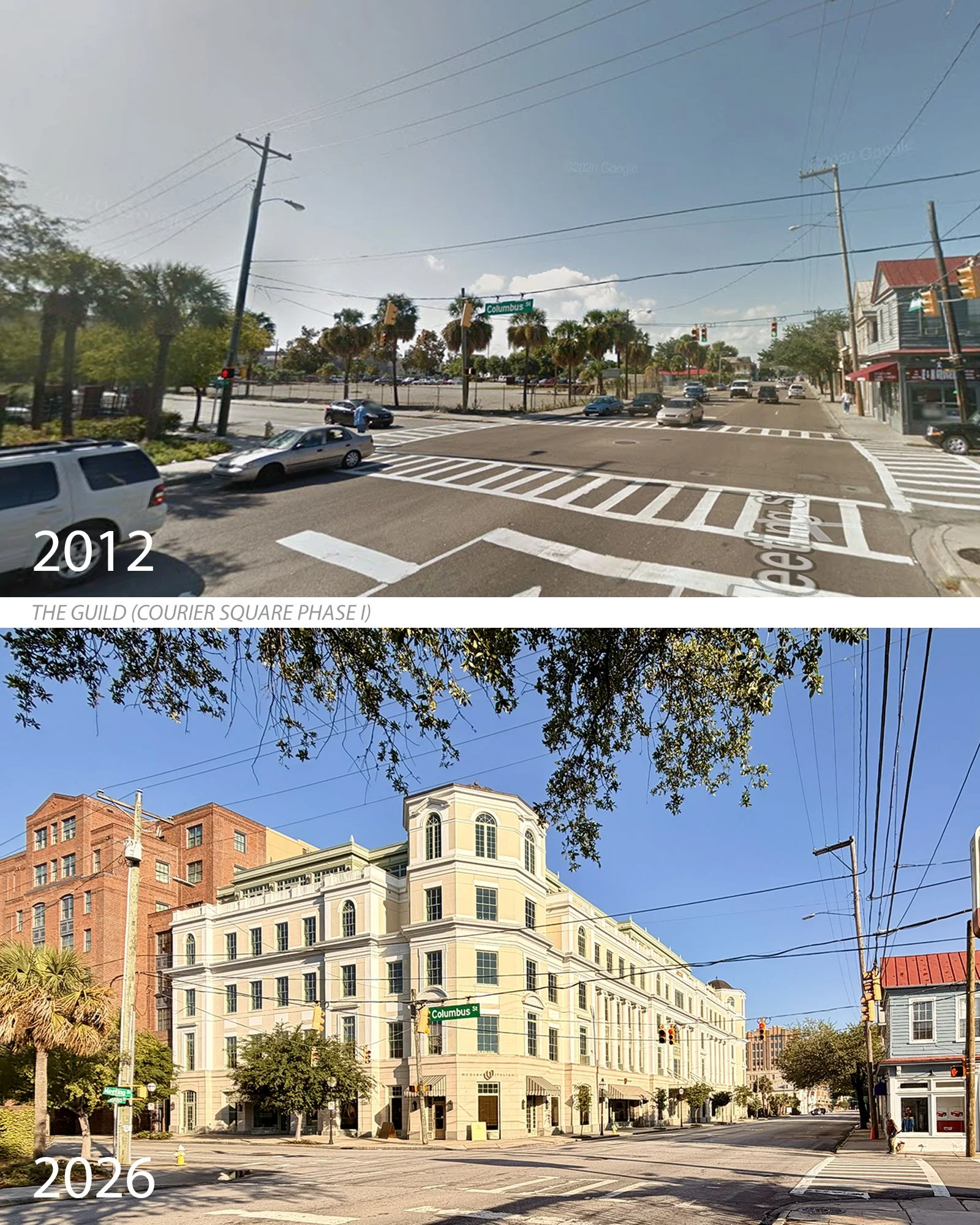
The Guild
The Guild helped redefine urban living along Upper Meeting Street and became part of the broader renaissance happening in that area.
I've always found neighborhood transformation fascinating because it rarely happens because of one project alone. It's usually a collection of individual decisions that eventually create a completely different experience.
When I look at these Then → Now images, what stands out to me isn't just how different the buildings look.
It's how different the city around them feels.
Charleston treasures its past, but it's also a living, evolving city. Historic preservation, adaptive reuse, new development, public spaces, cultural institutions, and housing are all part of that story.
And that's what I enjoy about architecture.
We're not just designing buildings. We're helping shape the places where people live, work, gather, and experience a city.
I'm curious—which of these projects have you watched transform Charleston over the last decade?
And if you enjoy seeing Charleston through the lens of architecture, historic preservation, adaptive reuse, urban design, and development, follow Buildings Are Cool. I'll keep sharing the buildings, projects, and stories that make this city so interesting.
You can also follow me on LinkedIn for more of my work and thoughts on architecture, development, and design.
Then photos: Google Maps
Now photos: Buildings Are Cool